
From Italy to Nepal by motorcycle
Travelling to Nepal is a challenging adventure, but one which is also irresistibly fascinating

All proceeds would be going to the U.O.C. of Pancreatic Surgery at the Policlinico Rossi in Verona.
Travelling to Nepal is a challenging adventure, but one which is also irresistibly fascinating. We linked our trip to a fund-raiser, in support of cancer research. Our thoughts went straight to a friend of mine, Federico Sellaroli, who sadly passed away too soon. It was an easy choice for us to dedicate this trip to scientific research on pancreatic adenocarcinoma. All proceeds would be going to the U.O.C. of Pancreatic Surgery at the Policlinico Rossi in Verona.
We decided on the final route just a few weeks before leaving: we would both leave directly from our own homes, me from Ceccano (FR) and Gianni from Presicce (LE). We would meet in Bari, take the ferry to Igoumenitsa and then set off by motorcycle, through Greece, Turkey, Iraq, Iran, Pakistan, India and finally Nepal.
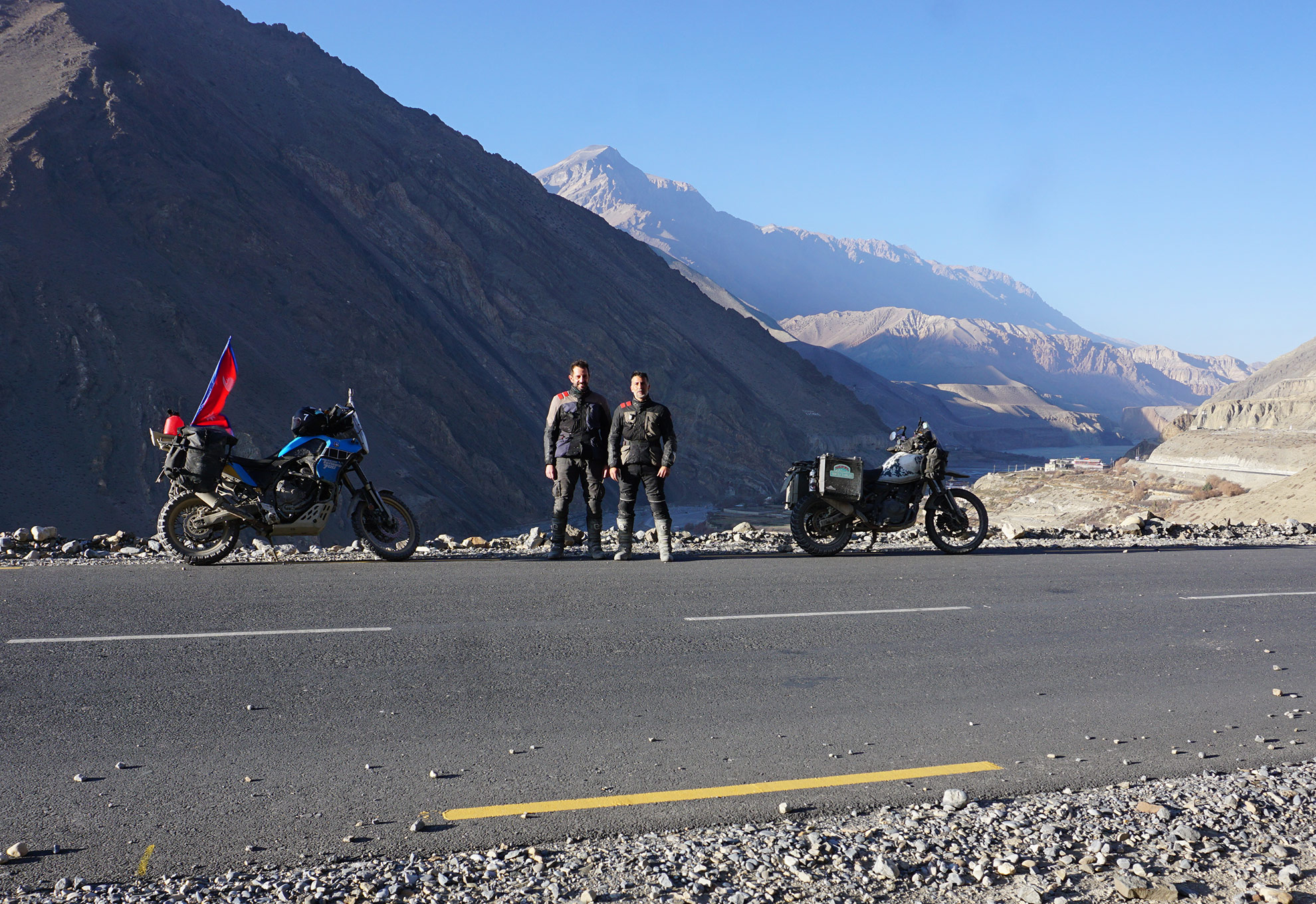
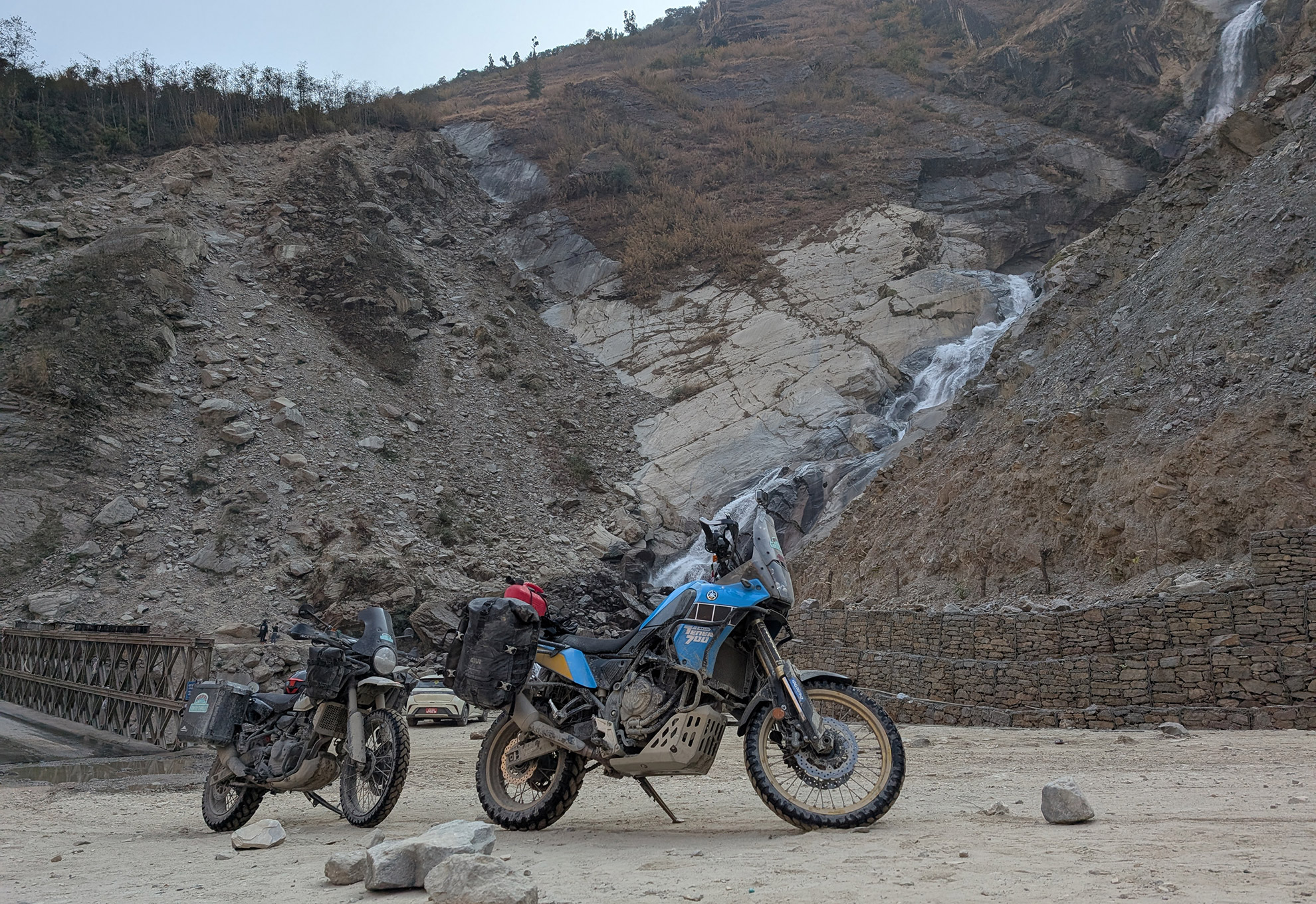
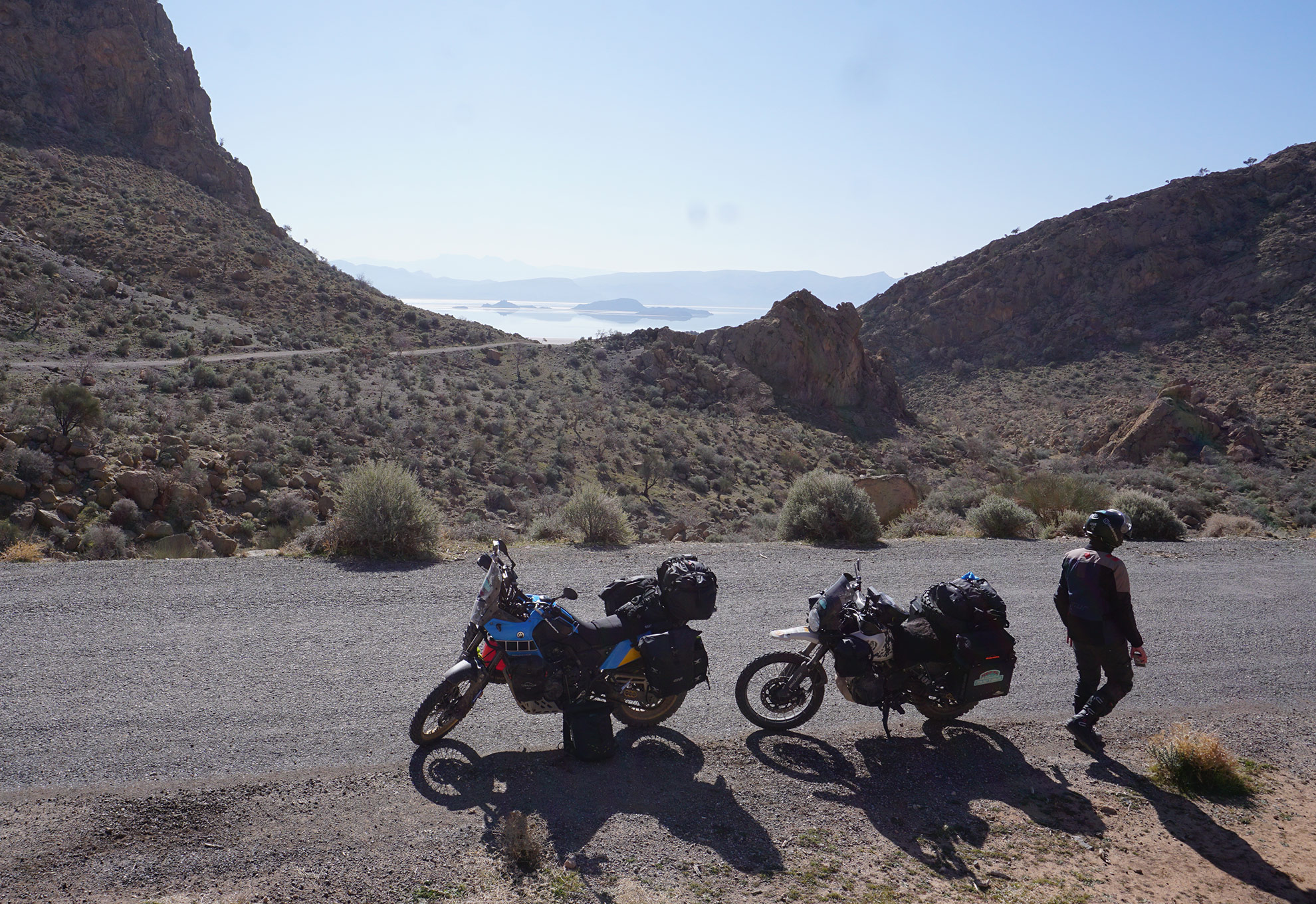
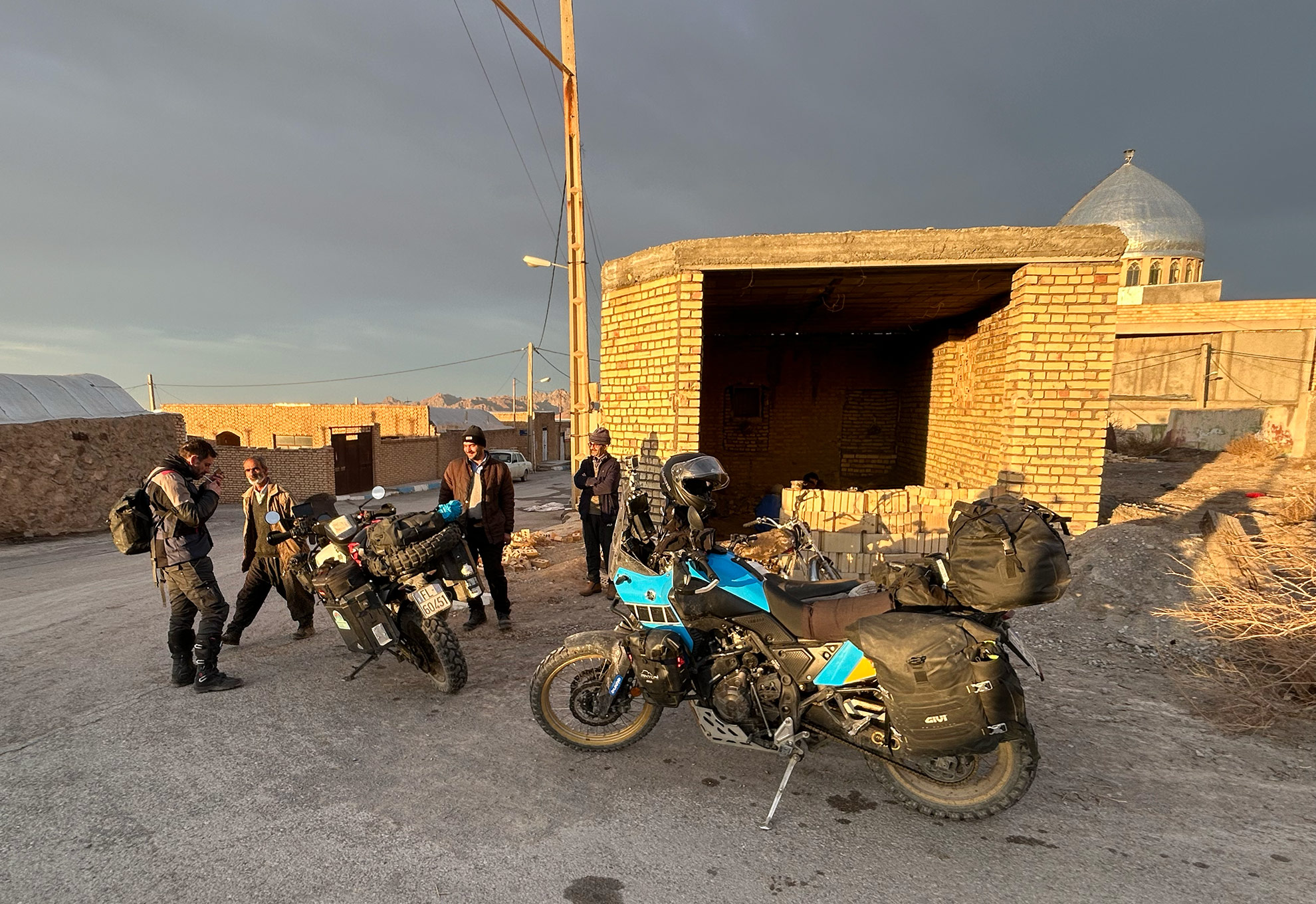
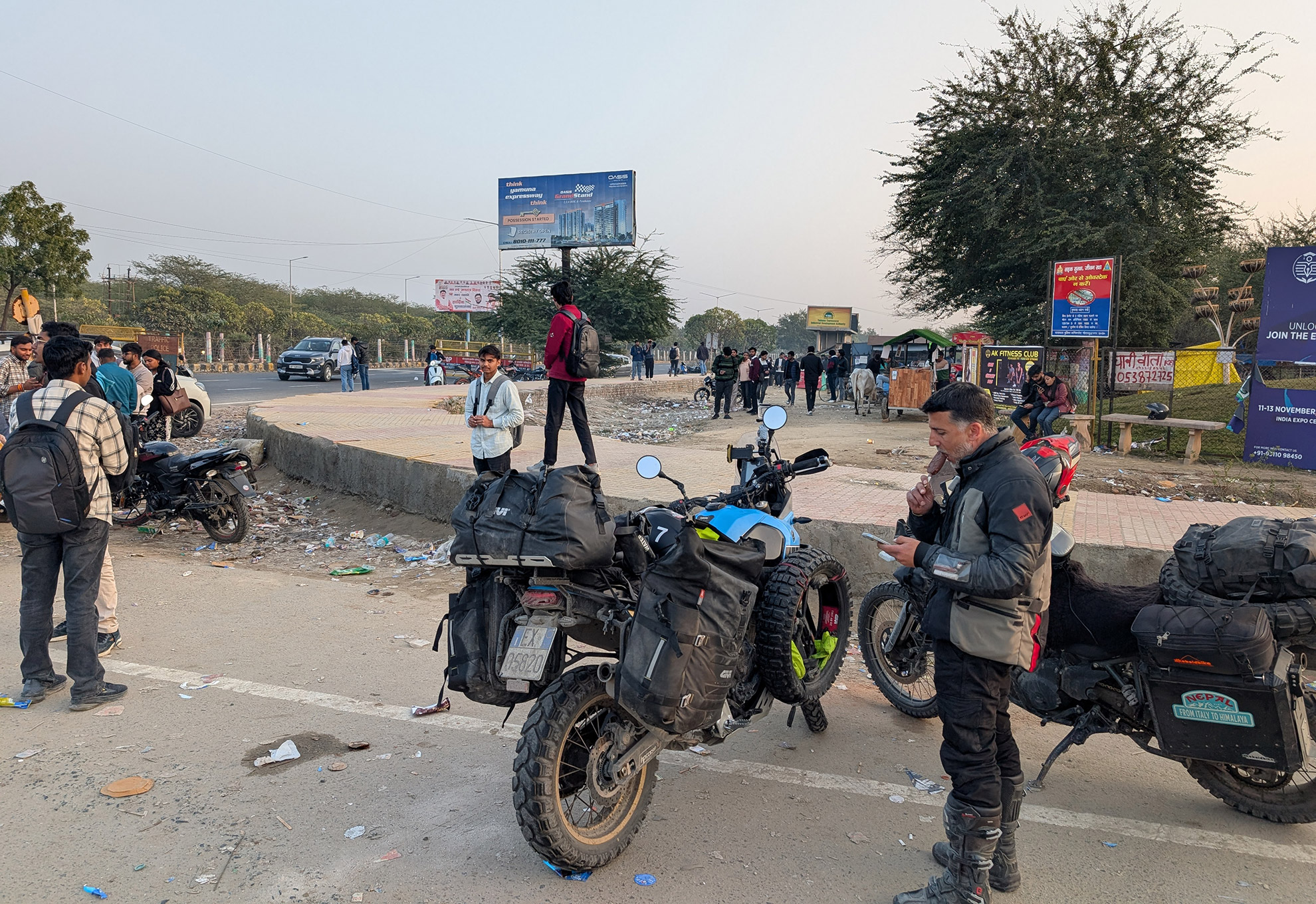
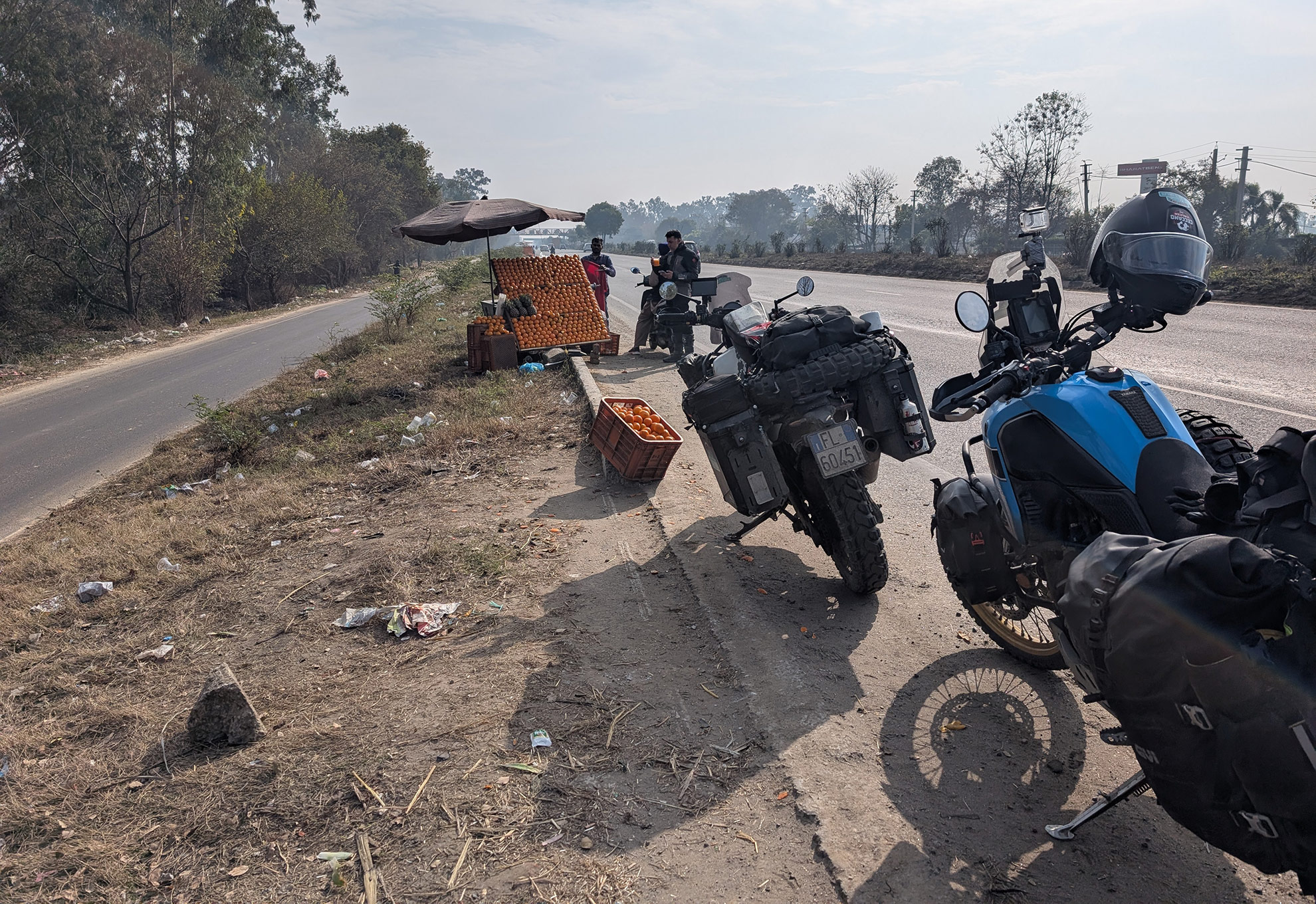
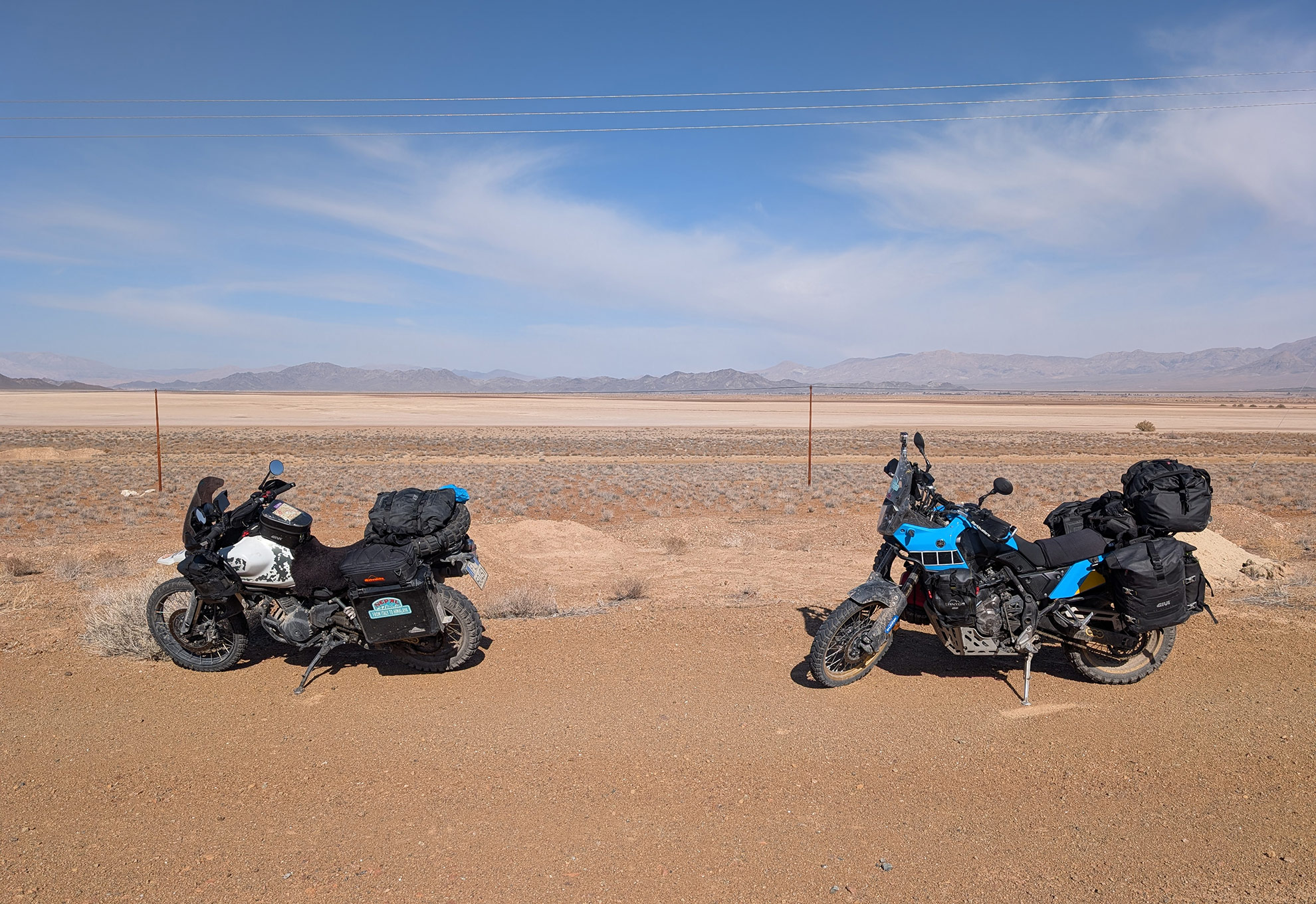
I was travelling on a Yamaha Tenerè and Gianni on a Royal Enfield Himalayan. We left on 28 December, 2024.
At dawn, from Igoumenitsa, the motorway enveloped us within the snowy mountains of Greece, amidst sub-zero temperatures and snow reflecting a pale winter sun. At the end of the day, we were greeted with rain and cold at the Turkish border.
Turkey, Iraq and Iran
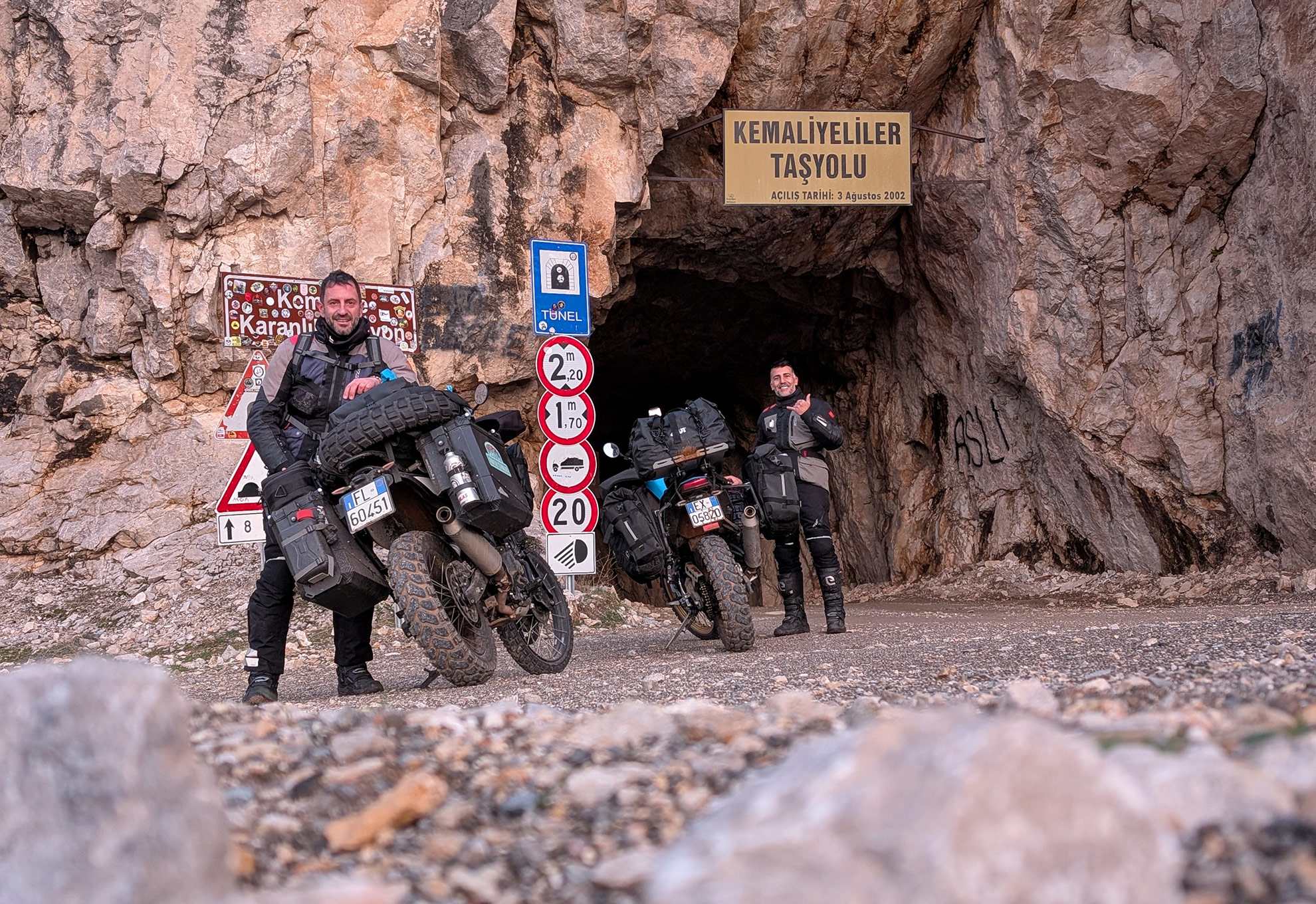
Leaving Istanbul, we crossed the bridge over the Bosphorus and were officially in Asia. The motorway wound through immense expanses of dry grass, slowly fading into darkness. In the morning we headed towards Kemaliye, passing through the Dark Canyon, a narrow and striking gorge in the mountainous heart of Turkey.
The canyon forced us onto a narrow, bumpy road with no protection or signposts, with hairpin bends and exposed sections on the river. Water was dripping off the rocks, increasing the feeling of danger. The road was uneven and full of puddles. We had to be extremely careful, but at the same time, it got the adrenalin going, even in the darkness.
The Iraqi border
Our destination that day was Silopi, close to the border with Iraqi Kurdistan. The road was full of bends and shady stretches, forcing us to pay extra special attention. All around us we had a view of the Euphrates River, framed by majestic landscapes.
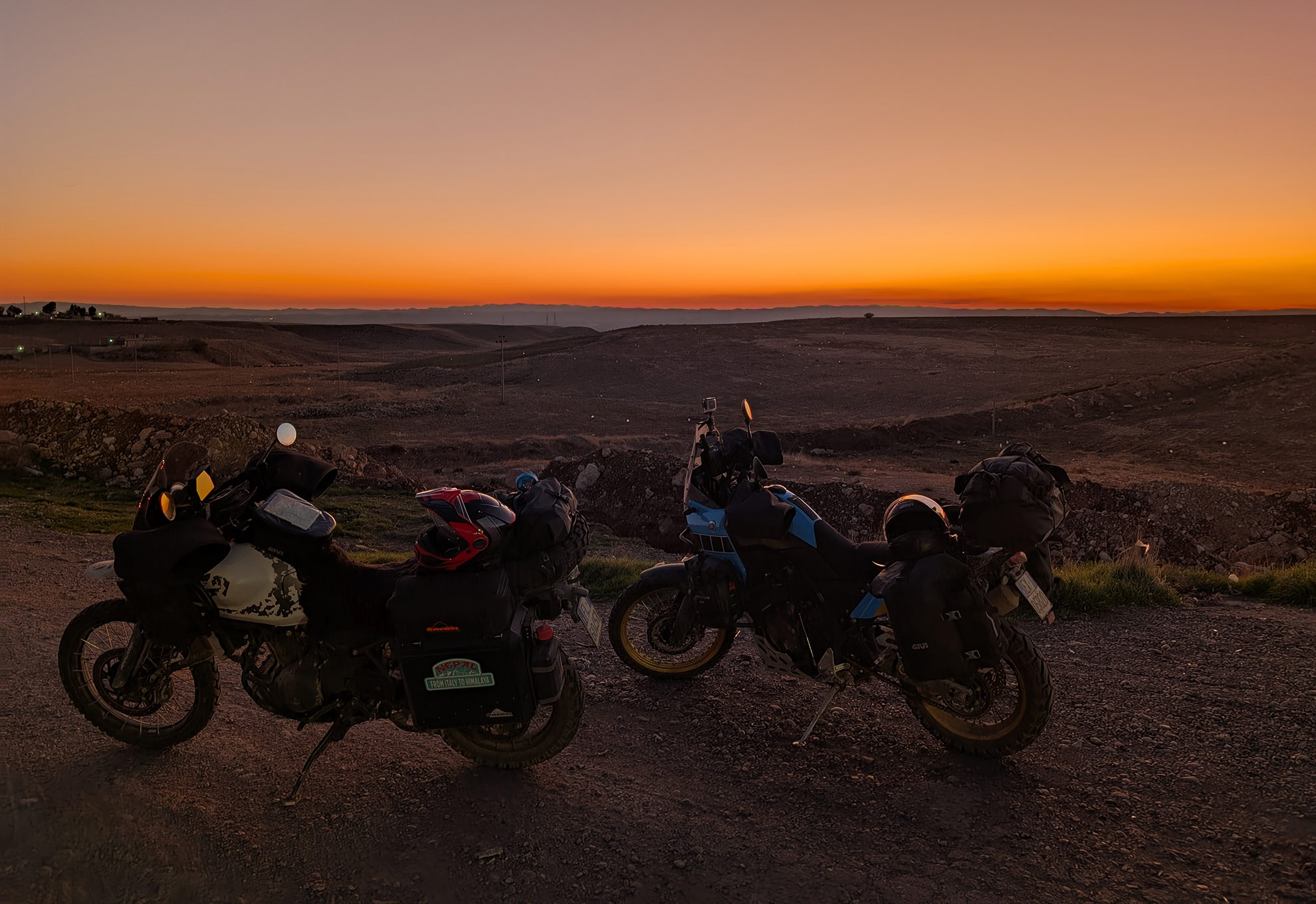
The next morning we entered Iraqi Kurdistan. We crossed it in just one day and stayed overnight in Sulaymaniyya, close to the Iranian border.
Iran
The moka was bubbling, spreading the aroma of Italian coffee. After breakfast we were on our way to the Iranian border, feeling slightly apprehensive, although the feeling slowly melted away, kilometre after kilometre. While the world advised against going to Iran, we had already decided to include it in our trip.
Around 11 o'clock we reached the border. The young Iranian soldiers greeted us with a mixture of surprise and mistrust: passport, visa and a search.
The bureaucracy was unnerving: the same agent checked the same documents several times, but they never asked us for money. At 3.30 p.m., finally, the border was behind us.

Esfahan, Persepolis and Shiraz
I had often heard tales of Esfahan, always spoken about enthusiastically, and I couldn't wait to see it with my own eyes. The route to reach it was not an easy one: the road would alternate between clefts of rocks or potholes, forcing us to ride extremely carefully. Confusion reigned supreme: reckless overtaking, vehicles driving in front of us without looking, horns replacing brakes. An out-of-tune, continuous concert.
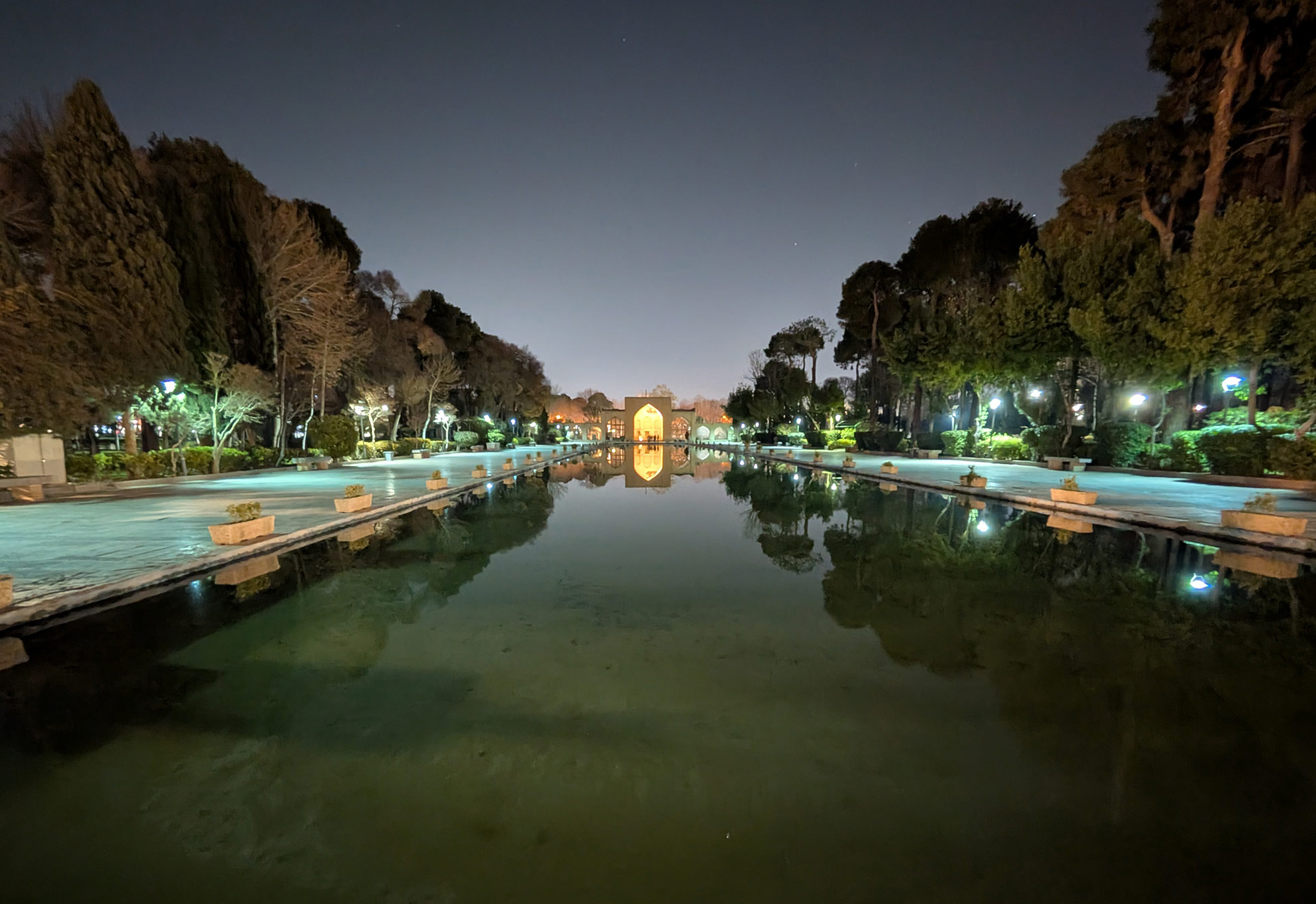
The next day, Alì appeared, a taxi driver and tour guide. He showed us the wonders of Esfahan in just one day, but it really deserved a whole week.
We also thought of the women we met: smiling but marked by harsh rules, forced to wear the veil and respect a strict code. Their kindness struck us as much as the places.
Persepolis and Shiraz
Even from the outside, Persepolis appeared to be more than a heap of ruins: the city, built on an imposing elevated platform, still seemed to dominate the land.
Despite the destruction ordered by Alexander the Great in 330 BC, Persepolis has retained its charm. The most beautiful part is the Apadana, the imperial audience palace. We were struck by the details: the carefully sculpted flowers, the delegations of the 28 nations faithfully represented, each with their own features, clothes and gifts.
Once the visit was over, we left for Shiraz, about an hour away. We reached the King of Light. Here, after several checks, we entered a palace which left us speechless: walls, columns and ceilings decorated with thousands of mirror fragments creating incredible reflections and colours, as if we were inside a star.

The Lut Desert and entering Pakistan
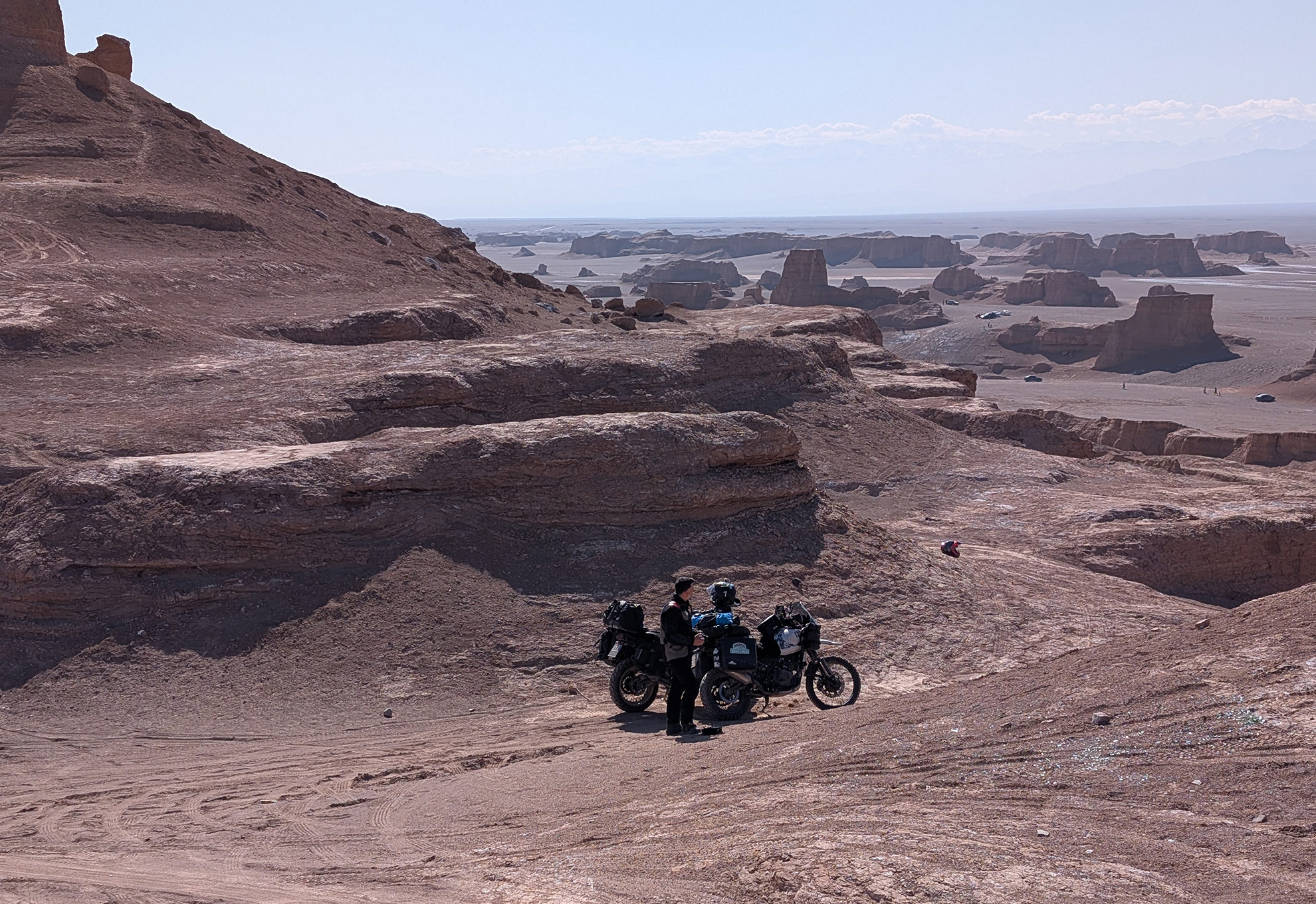
The outpost for the Lut Desert was the town of Shahdad.
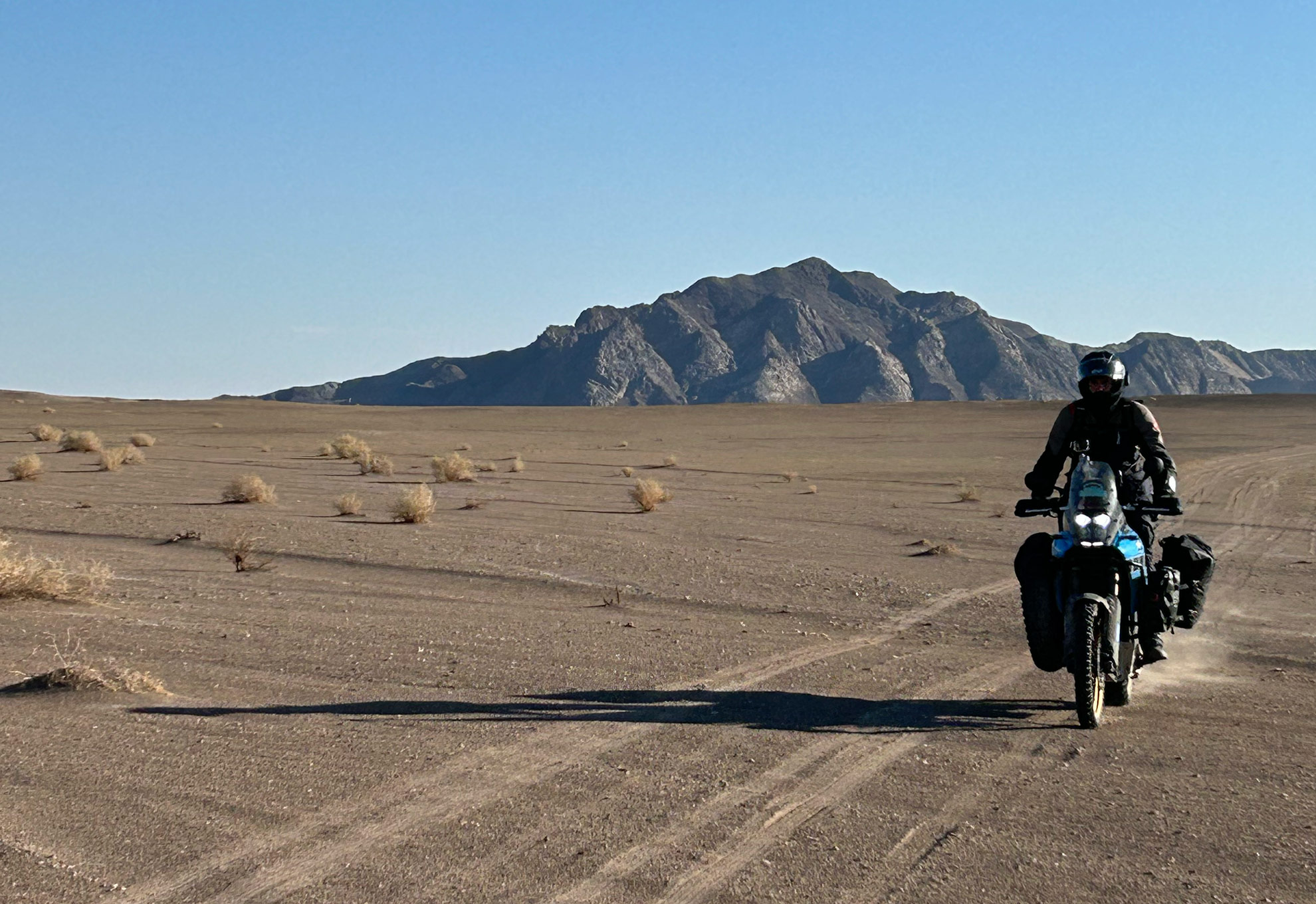
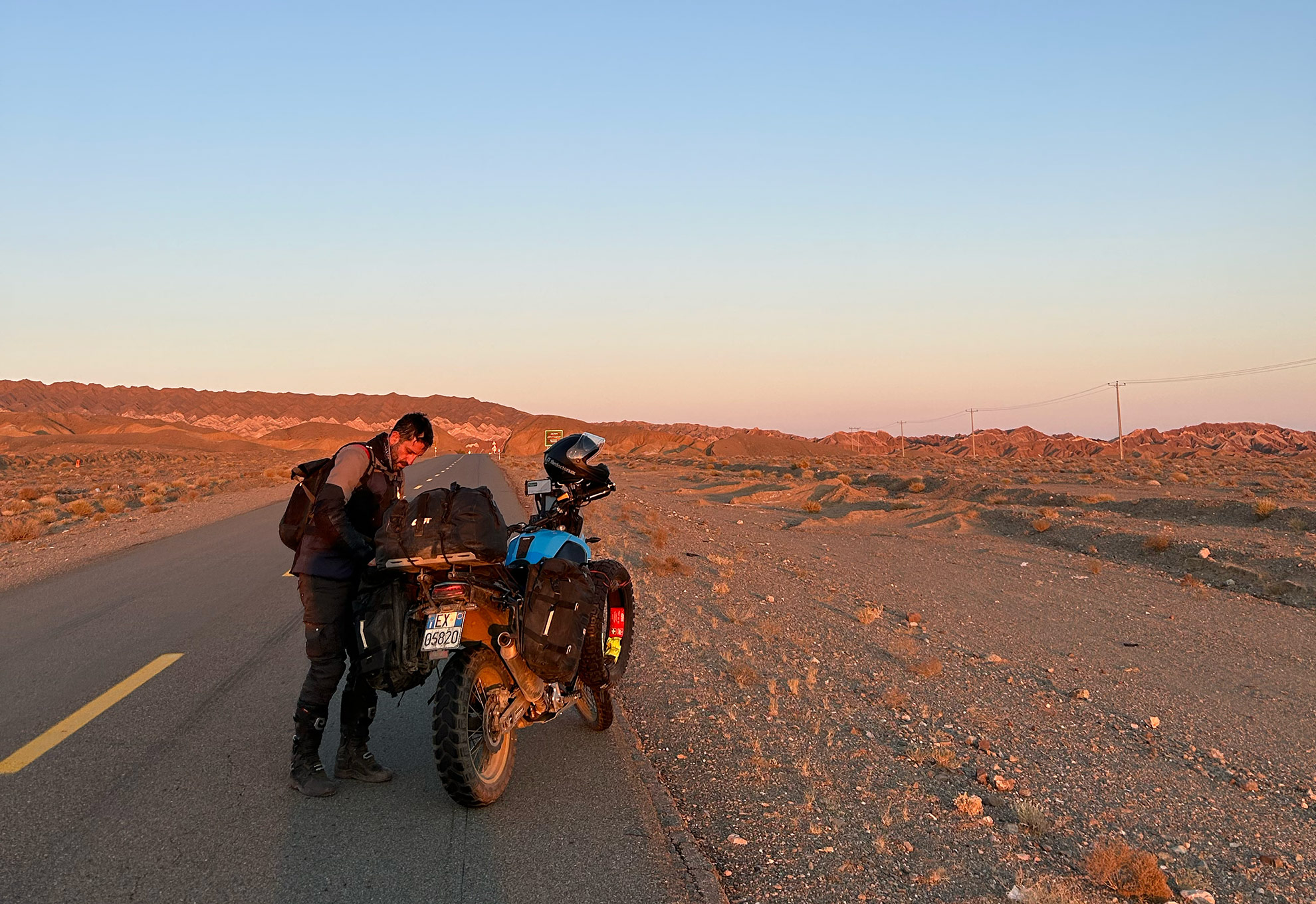
Entering the Kaluts area, we chose a spot where several cars were parked and people were picnicking. After a few metres, we found ourselves surrounded by rock formations, without a precise destination but enchanted by the landscape. We kept going. The ground on either side of the road was covered with a white layer of salt, just like a veil. As the hours passed, the white gave way to warmer tones: the brown of the mountains and the ochre of the earth blended with tufts of dry grass. As evening approached, the colours became brighter: the ochre turned amber, the horizon was tinged with orange under a slowly setting sun, blurred at the edges, like a painting. The mist rising in the clearings added a surreal touch to the scene. We stood contemplating that sunset until the last light of day gave way to darkness.
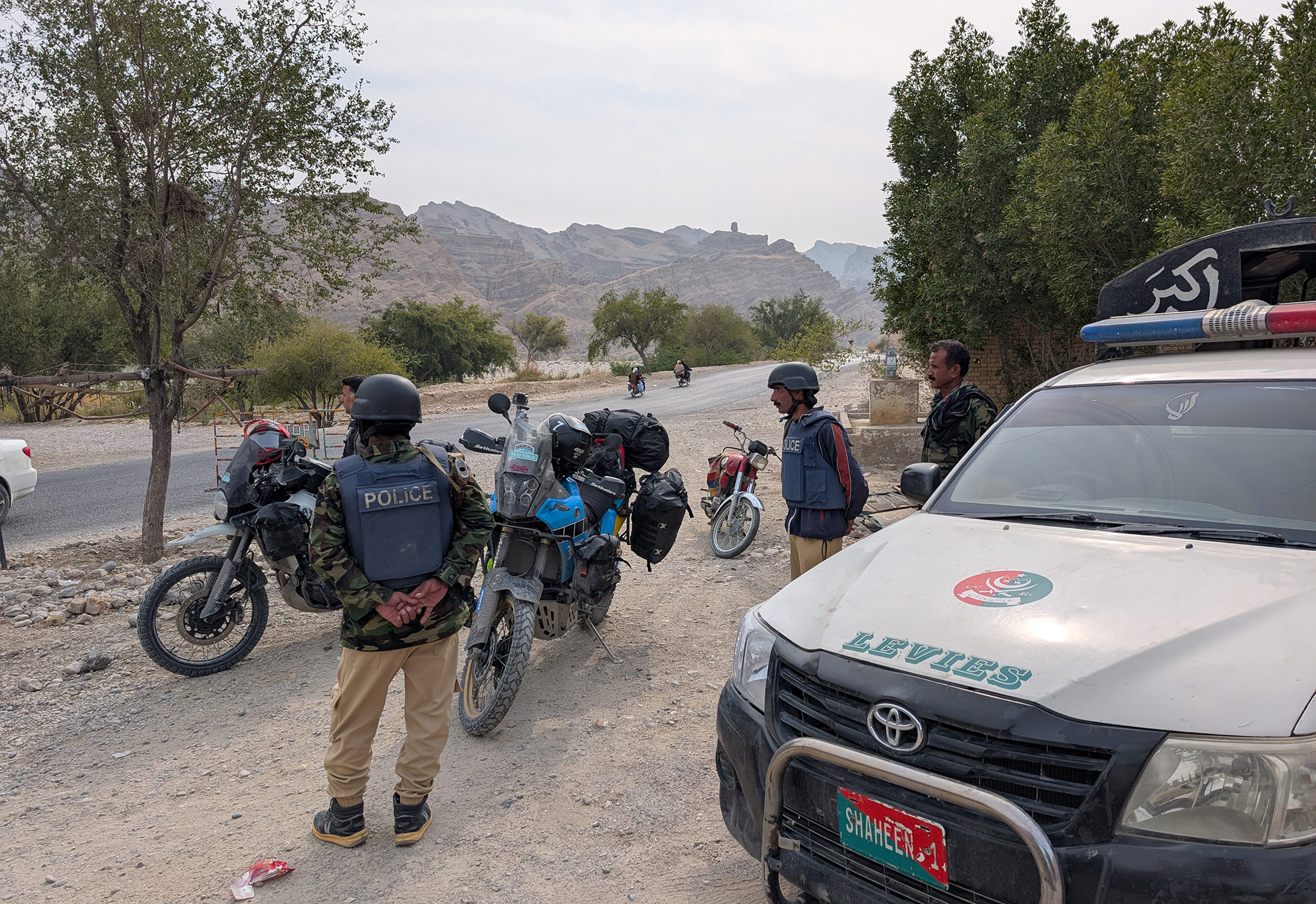
In the morning we headed for the Pakistani border. It felt like leaping into another world. The first office was tiny, but there was a huge paper register, where the agent noted down our details. Then we were escorted to another office for passport control, in the midst of a queuing crowd. Once the registration was complete, two soldiers escorted us to a small, dilapidated barracks inside the Taftan border complex. We were to stay there until further notice. When we asked if we would leave the next day, the answer was a vague “Inshallah”. We were to be escorted from Taftan, all the way to Quetta, about 600 km.
We had sleeping bags, Gianni even had a mattress; the Levies brought us blankets and invited us for tea in their hall which was used for multiple purposes: meals, relaxation, prayers and Kalashnikovs.
We talked about how long we would have to stay there, but nobody could give us any answers. We were waiting for the permit to arrive from Islamabad, but no one could tell us anything about when it would be issued.
The next day we were taken to a guest house, which was better than the barracks, but it didn't take long. We stayed there for three days, drinking tea at all hours, waiting for the go-ahead from Islamabad.

Taftan, Quetta, Multan
The alarm went off at 4.30am and within minutes we were at the meeting point. There, we found two buses and, shortly afterwards, there were about ten. Almost at the same time, hundreds of travellers came out of another barracks. We spent the day overtaking the buses, shouting at reckless drivers, and going through continuous check-points, where the controls always focused on Gianni and me. It was in this state that we arrived in Quetta in the evening at 10pm, exhausted. The next day we woke up refreshed and full of energy, ready to take to the road again and head north. But the Pakistanis surprised us again. We were ready to leave, but one document was missing: the NOC (No Objection Certificate). We had to get the NOC. This delayed our departure by another day. We were supposed to be escorted at least as far as the Belucistan border.
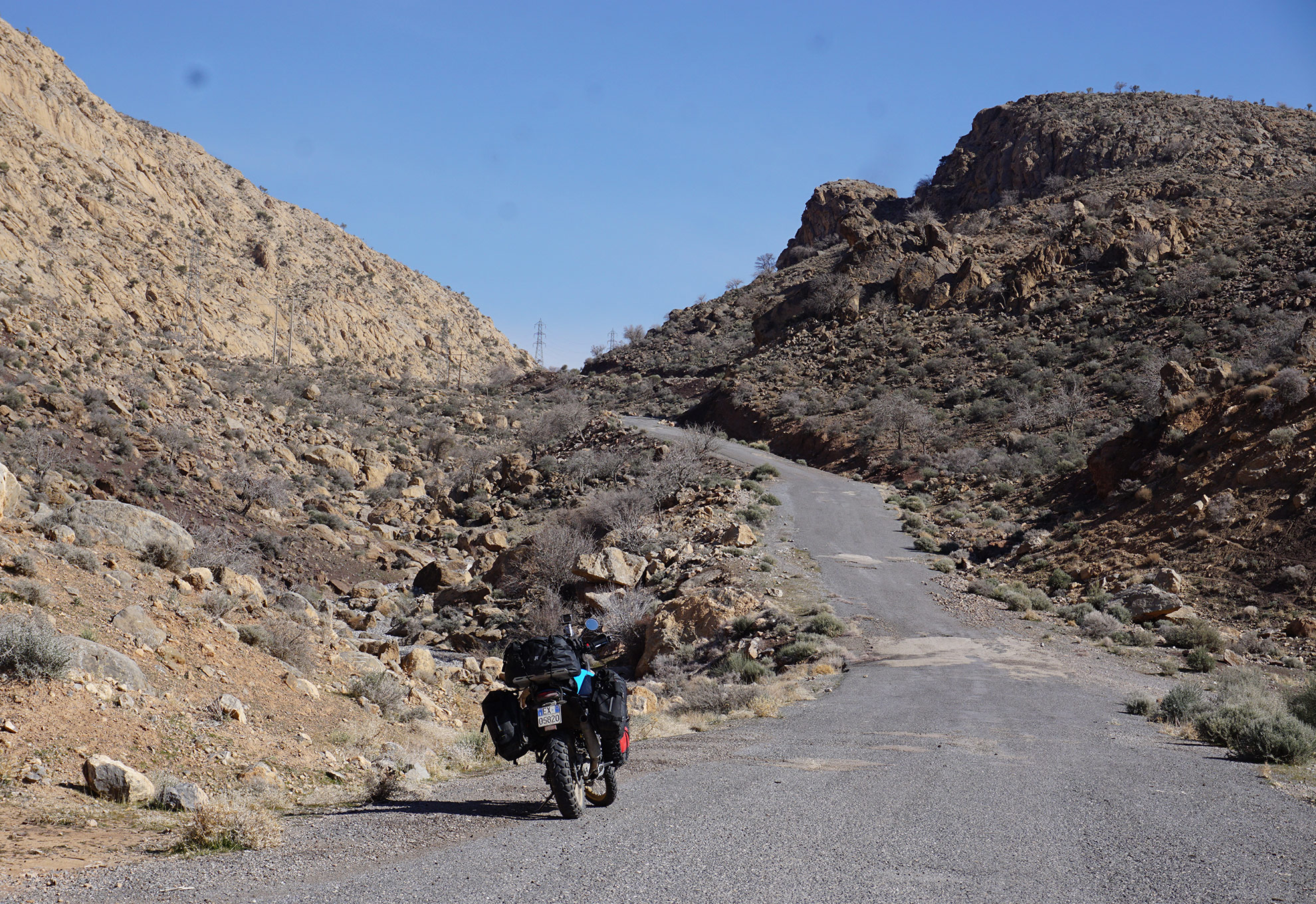
By morning, without even having breakfast, we were ready. Outside the city we found ourselves crossing spectacular but treacherous gorges. The road was bumpy and the sheer cliffs seemed to threaten us at every turn. The mountain was dropping rocks and stones but fortunately they didn’t get us. In those places, if you don't risk being hit by a gunshot, you can still end up under a boulder. We were determined to ignore the escort's directives. By now we had turned ourselves into genuine outlaws, perfectly adapted to the chaos of local traffic. Playing cops and robbers, we arrived in Multan in the evening.

India
In the morning we were ready to head for the longed-for border with India, the Wagha-Attari border. Our endurance was at its limit. The only thing we could think about was leaving that country. Once we reached the border, we met a facilitator who offered to guide us through the customs procedures, warning us that we didn’t have long: if we completed the exit procedures without entering India, we would be stuck in no-man’s land. Just in time, India's gates opened just enough to let us in. And then they closed permanently behind us.
In India, from the very first kilometres we realised that we had entered another dimension: the population density was high and, everywhere, there were people, animals, carts, children and countless Tuc-Tucs.
Agra was the gateway to the Taj-Mahal. It appeared perfect in the distance, as if it were emerging from the earth rather. As we approached, its majesty left us speechless: the white marble, the inlays of coloured stones, the floral motifs and the inscriptions in different languages were a masterpiece.
We were only a few kilometres away from the border with Nepal, where we would be staying for about eight days. Without delay we set off and drove towards Sounali, the border. As we rode those kilometres there were so many emotions: we had almost made it. The crazy idea of reaching Nepal, with our motorcycles, was about to come true and we were elated.
At the border, after passport control and motorcycle checks, we finally crossed the border. The Nepalese welcomed us with smiles and kindness: we were happy, we had made it.

the Himalayan
We set off on the Siddhartha Highway towards Pokhara, in the midst of dust and bumpy roads. In places the road surface improved and we found small rest stops. After a short stop to eat, we reached Pokhara in the late afternoon. The atmosphere was lively, full of tourists keen on trekking. The next day we would get our permit to enter Mustang and start a new adventure.
In the morning, we went to the tourist office for the permit. That day we were to ride 180 km to Annapurna. As we left the traffic of Pokhara behind us, the road became winding and I began to accelerate, caught up in the excitement of the moment. After Patichaur, however, the road surface gave way to rocks, potholes and mud. We found ourselves in the midst of endless construction sites, trucks and tractors, constantly alternating between dust and mud.
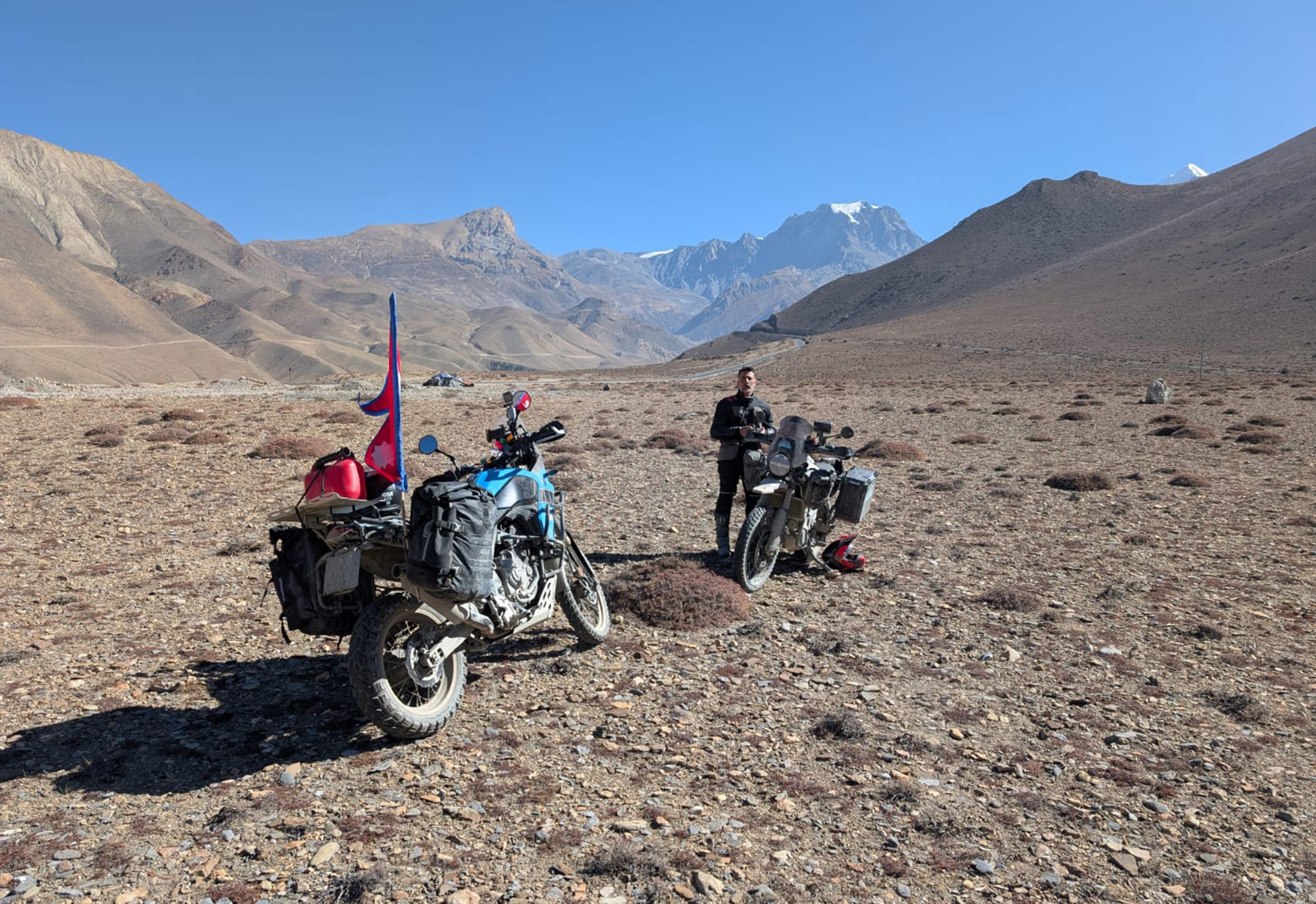
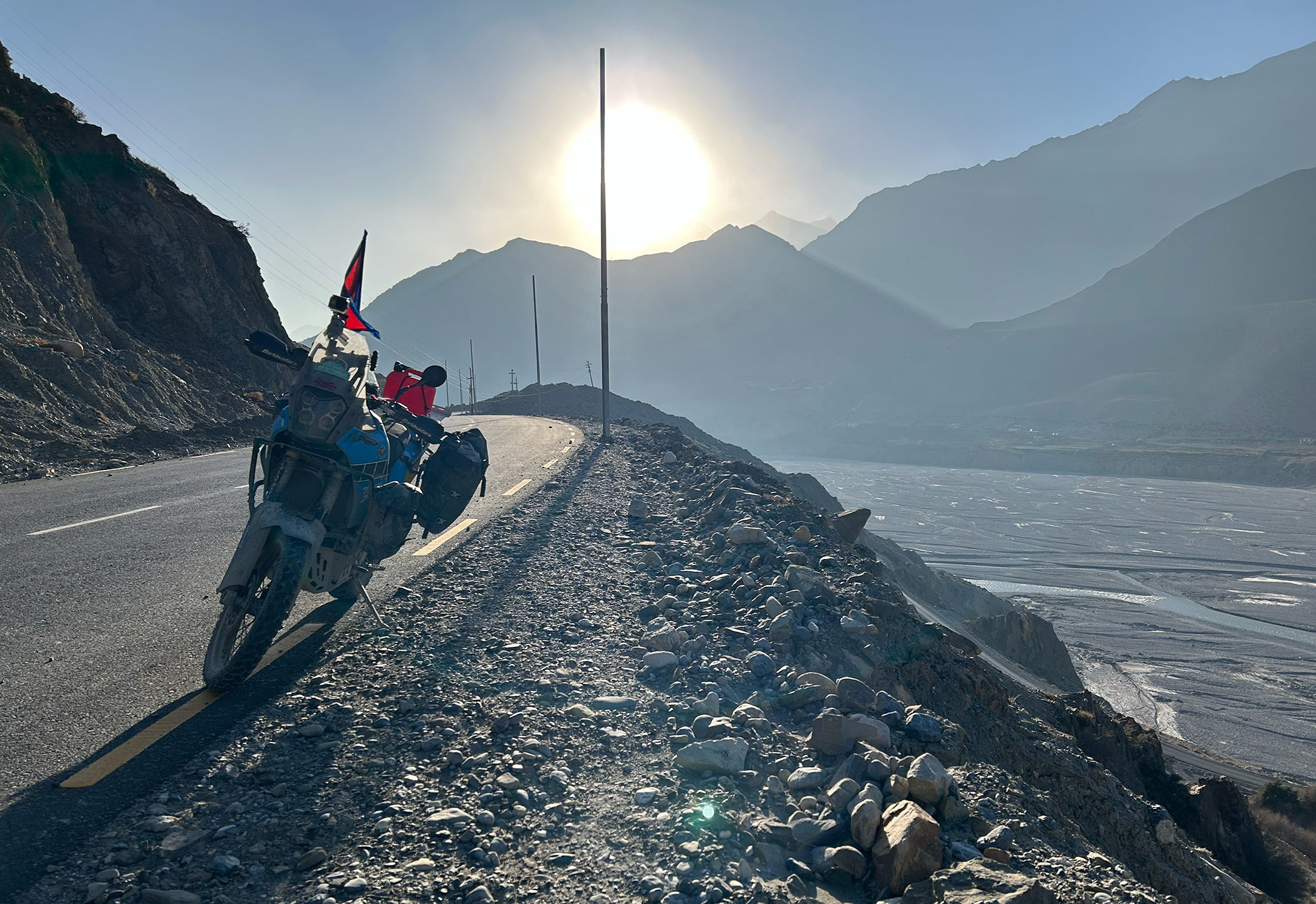
At Jomsom, the road finally improved and we rode, smiling, to Muktinath.
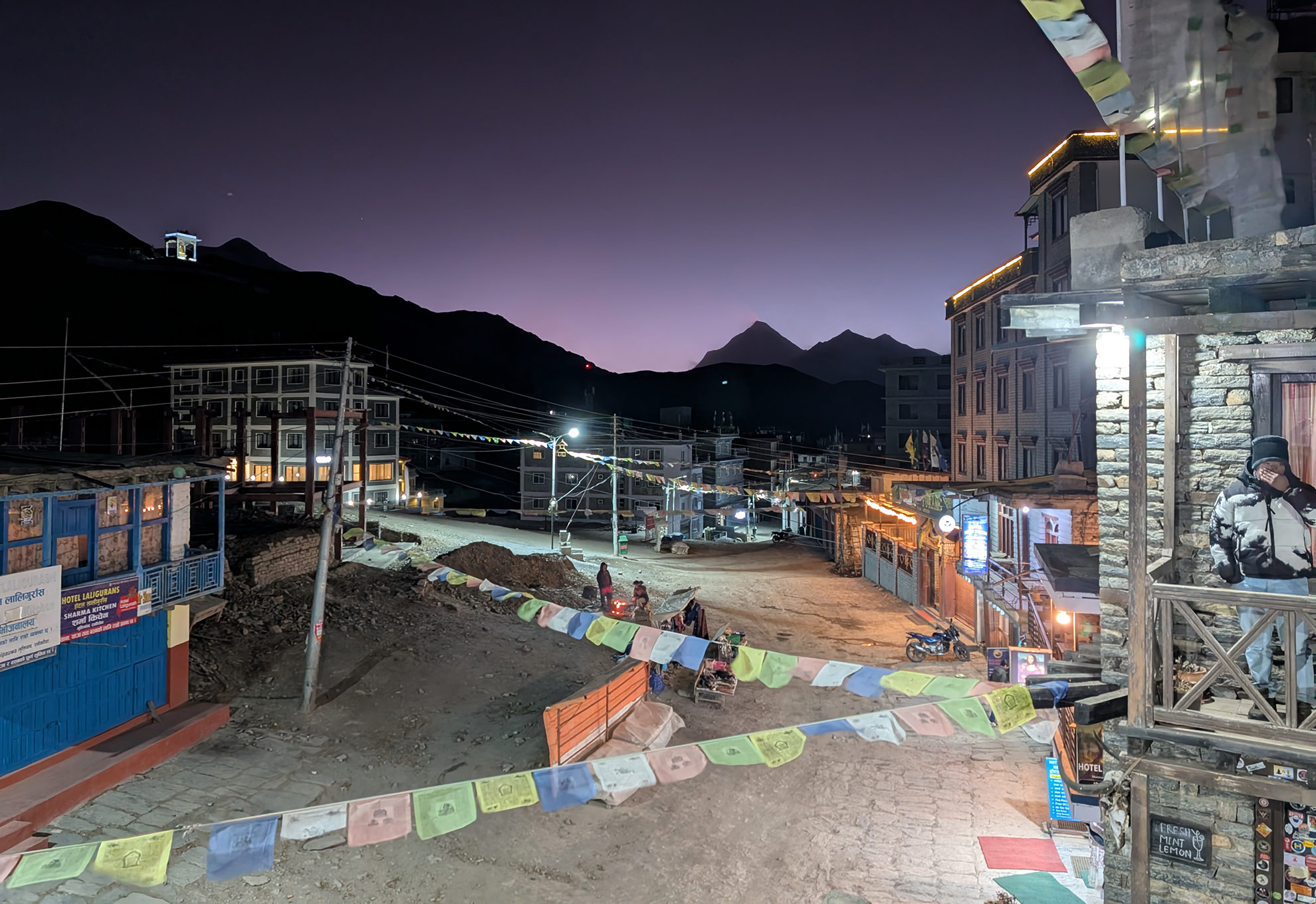
The village seemed deserted: closed hotels, a few horses and flags. Eventually we found somewhere that was open: the Bob Marley Hotel. We had landed, our destination within the destination. Getting off the motorcycle was a moment full of joy and adrenalin: the Himalayas were ours.
The first stop was the Buddhist and Hindu temple, just beyond the hotel. We parked at the bottom of the steep steps, about 400 of them, and at an altitude of 3800 metres, they left us breathless after just a few steps. Not even the views could make the climb less tiring. After our visit, we headed towards a nearby village. The descent was steep, the road was covered with stones, and I struggled to control the motorcycle. We ended up in a magnificent landscape: just mountains, stones, dust and a light wind. In the afternoon, we looked for the Tibetan bridge at Kagbeni, which a friend had told us about. It was not difficult to find and we crossed it carefully. Through tight bends and ascents and descents, avoiding landslides and overhangs, we reached Tiri Village, a place that seemed uninhabited. We had only covered 30 km, but it was an intense and unforgettable day.

Kathmandu
We spent the last few days in Kathmandu. Reaching it was not at all easy. There is only one road and there was a lot of construction work going on. In Kathmandu, we enjoyed its chaotic but fascinating atmosphere. We visited the three Durbar squares: the one in the capital, the one in Patan and the one in Bhaktapur. Each had its own charm, sitting among ancient temples, statues and palaces that told stories of a distant past.
We got lost in the narrow, dusty alleys of the city, amidst colours, smells and sounds that never seemed to fade. The day before we left, we went to the airport depot with the freight forwarder to prepare the crates for shipping the motorcycles. The next day we left, our heads and hearts full of images, aromas and stories that would stay with us for a long time.
It was 2 February, we had been travelling for 37 days and covered around 11,500 km.
Total funds raised: € 15,420.00